

The Juneau Assembly is considering an ordinance that would turn the city’s cold weather emergency shelter into a year-round operation, instead of just opening from mid-October through mid-April.
At an Assembly committee of the whole meeting on Monday night, Juneau’s Deputy City Manager Robert Barr said it would give the city’s most vulnerable residents a place to sleep every night of the year and reduce the number of unhoused people camping during the summer months.
“Juneau and Anchorage lead the state in the amount of permanent, supportive, transitional housing and rapid recovery beds that we provide for our residents who are in need,” he said. “However, that existing number of units that we provide doesn’t quite meet the need.”
For the past three years, Juneau’s cold weather emergency shelter has been located in a city-owned warehouse in Thane, about a mile from downtown. It’s funded by the city and operated by staff from St. Vincent de Paul, a local nonprofit that supports people affected by homelessness.
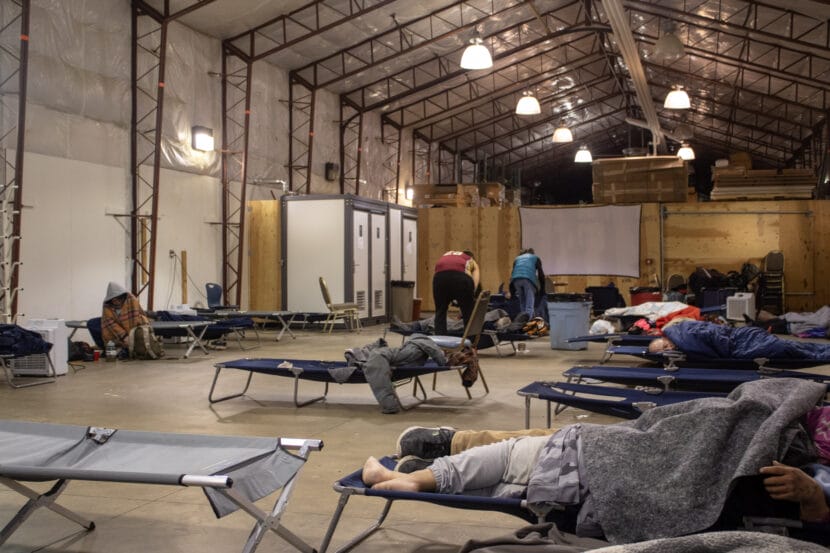
The shelter is open from 9 p.m. to 6:45 a.m. daily. It accepts anyone to stay as long as they aren’t disruptive to other people resting there. It’s considered Juneau’s lowest-barrier shelter and is meant to be a last resort for people without housing to survive the winter. This season, staff say the shelter has averaged about 45 people per night.
But when the shelter typically closes its doors in mid-April, many of its patrons are left with few options for where to sleep during the summer months.
That has resulted in Juneau seeing a surge of unhoused encampments throughout the borough, particularly near the Glory Hall shelter in the Mendenhall Valley. Part of that increase is because of the closure of the city-run campground near downtown three years ago, which previously allowed unhoused people to set up camp through the summer.
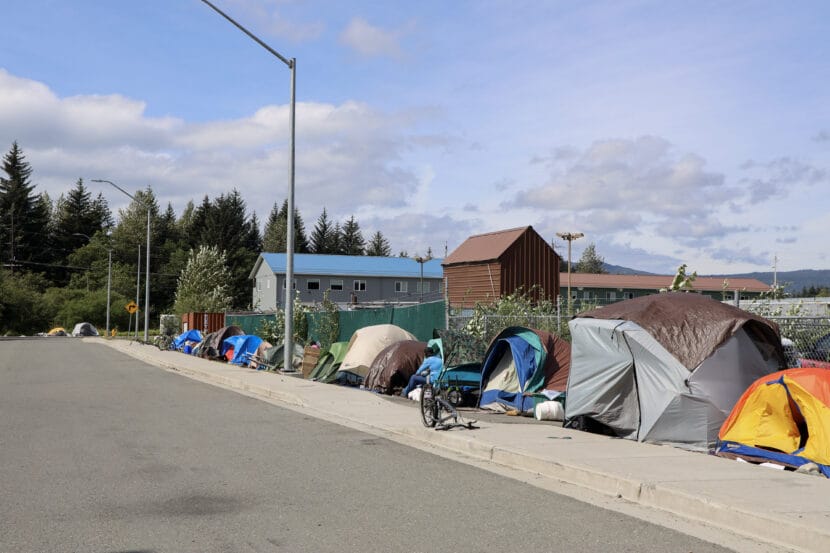
The proposed year-round shelter operation would theoretically give those campers a place to stay instead and reduce the number of encampments around town. But, Barr said, in order for that to work, city leaders recommend stricter enforcement to prevent encampments.
“We relaxed enforcement on that in the past due to not having adequate shelter space for these residents to go to, but we do believe — and our partners agree — that in order for an emergency shelter over the summer months to be successful, we would have to enforce the code as written,” he said.
Right now, Juneau’s city code allows for dispersed camping but prohibits it on places like sidewalks or roads. In general, the city allows people to camp on unimproved public land as long as they keep their impact low on the surrounding community.
Last summer, the city dismantled large encampments that grew near the Glory Hall multiple times in response to safety concerns and public outcry.
On Monday, the Assembly unanimously approved bringing an ordinance on the topic to a future meeting and taking public testimony. If the ordinance is approved, the city would spend about $208,000 to extend the shelter through June 30, which is the end of this fiscal year. The annual cost for the year-round shelter would be $1.1 million. That money would be pulled from the city’s general fund and included in next fiscal year’s budget starting in July.
Assembly member Christine Woll said she supported the proposal, but had some concerns.
“I am uncomfortable with changing our enforcement, even though I’m supportive of opening up more space for people,” she said. “But it sounds like we’ve done a good outreach to the social service providers, so they know best, but I want to hear from a lot of people.”
The Assembly is slated to hear public testimony and vote on the ordinance at its April 6 regular meeting.
Copyright 2026 KTOO