

Juneau’s cold weather emergency shelter, which was set to close for the season next week, is turning into a year-round operation. The Juneau Assembly unanimously approved an ordinance on Monday to make that change.
The aim is that opening the shelter year-round would help address Juneau’s current lack of shelter space and housing units, and would reduce the number of unhoused people camping outside in the summer.
Multiple people, including social service providers and business owners, testified in support of the ordinance.
“We know we can’t fix every situation, but offering a year-round place for people to go is a practical, common-sense step that reduces crisis and stabilizes our community,” said Mollie Carr, the deputy director of St. Vincent de Paul in Juneau.
The nonprofit contracts with the city to operate the shelter located inside a city-owned warehouse in Thane, about a mile south of downtown. The shelter is considered Juneau’s lowest-barrier option for people without housing to survive the winter. The shelter is open from 9 p.m. to 6:45 a.m. daily. It accepts anyone to stay as long as they aren’t disruptive to other people resting there.
In prior years, the shelter typically closed in mid-April. But that left many people who use it with few other options for where to sleep during the summer months. So, many people opted to camp outside.
Last summer, Juneau saw a surge of encampments grow near the Glory Hall shelter in the Mendenhall Valley, leading to health and safety issues. Part of that increase was due to the closure of the city-run campground near downtown three years ago, which previously allowed unhoused people to set up camp through the summer.
City Manager Katie Koester said expanding the shelter’s operation is only one piece of the puzzle. She said the city plans to pair it with implementing stricter enforcement to prevent large-scale encampments, like what occurred last summer near the Glory Hall.
She said the more complaints about encampments the city gets, the more quickly and aggressively the city will likely respond with enforcement.
“We also would look at the public impact, not just who’s complaining, but what that impact is to the public health,” she said. “We would prioritize enforcement when those two things are high.”
Logan Henkins works at the Glory Hall shelter. During testimony, he said the situation last summer was both chaotic and unsafe for the campers and people who worked in the area.
“We all deserve a safe place to live and work. The warming shelter extension is not perfect, but it is the only doable thing we came up with,” he said. “Not allowing dozens of tents on Teal Street is not a violation of people’s rights. It is bringing order and safety to people’s lives.”
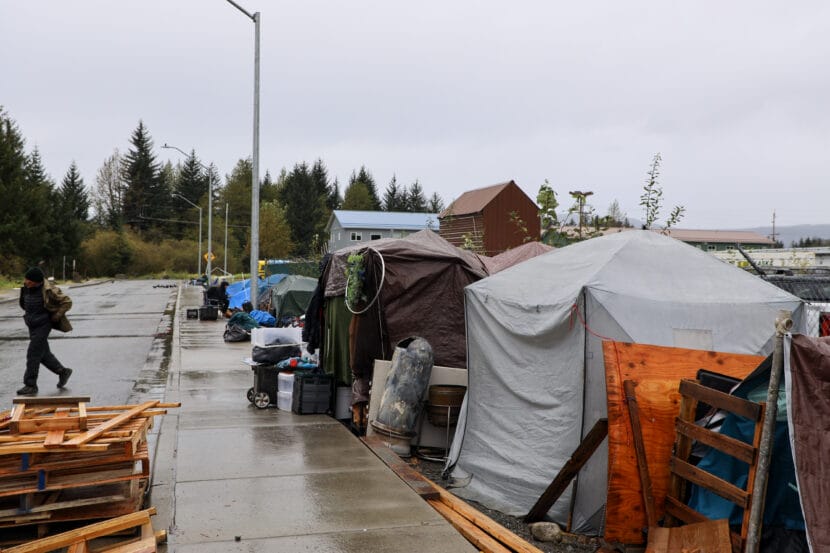
City officials say a year-round shelter operation would provide an alternative to camping and theoretically reduce the number of encampments around town. But, as Aaron Surma, the executive director of the National Alliance on Mental Illness, or NAMI, pointed out in his testimony, not everyone will want to go there.
“People are still going to be camping. The warming shelter isn’t for everyone,” he said. “There are people who’ve been camping all winter, during a fairly difficult winter. I don’t know if anyone noticed that or not, and so I think there’s still going to need to be some consideration of where those folks are going to go.”
City Manager Koester said the city will not remove every camper. She said the city generally allows people to camp as long as their presence does not lead to a high number of complaints or impact public safety.
The ordinance allocates about $208,000 to extend the shelter through June 30, which is the end of this fiscal year. The estimated annual cost for the year-round shelter is $1.1 million. That money will be pulled from the city’s general fund and included in next fiscal year’s budget starting in July.
A dozen social service providers also testified at the meeting to advocate for the city’s continued funding of social service grants. Many said they’re worried about fallout if the Juneau Assembly decides to cut city funding during its current budget-making process to some of Juneau’s most critical social services.
Representatives testified from multiple organizations, including JAMHI Health and Wellness, Southeast Alaska Food Bank, Catholic Community Service and Alaska Legal Services Corporation.
It’s still unclear whether the Assembly will decide to make any reductions or how severe those reductions may be. But any potential cuts in funding made by the Assembly must happen before it finalizes the city’s budget in mid-June.
Copyright 2026 KTOO